Ping Pong
EnTeam Physical Game
Purpose
Build skills as collaborators and ping pong players by having fun with a common game with a twist – everyone cooperates by hitting the ping pong ball as many times as possible in one minute.
Requirements
- Time: 30-40 minutes — each game is 60 seconds long
- Number of Players: 2 or more
- Age range: Old enough to play ping pong
- Space: Enough space for a table and at least two people on either side to move around and play
- Equipment: A timer, table, net (or a dividing prop), one paddle per player, ping pong balls, and a scoresheet
- Prerequisites: None
How to Play
- Set a timer for 1 minute of play.
- Play begins when the time keeper says GO,
- Players on both sides of the table work together to bounce the ball back and forth as many times as possible before the timer goes off.
- A point is scored each time the ball goes over the net if the ball bounces on the receiving side.
- Scoring is cumulative (do not restart the score if play is interrupted).
- Matchplay: Players get to play with different players. All players play with each other once in order to complete a match.
Rules
- The ping pong ball must bounce once on the receiving side of the net before the receivers can hit it back.
- The ball can only be touched/hit by the paddle.
- If playing in a match, each player plays one game with another player. Keep rotating players until everyone has played with everyone at least once.
Scoring
- A point is scored each time the ball goes over the net and lands on the other side of the table.
- Both players earn a point each time the ball goes over the net successfully.
- Players win if the scores increase each time two players play together.
- Matchplay: add scores from each game – players win if their score improves in the next match. If the scores do not improve, they lose together.
Debrief Questions
The purpose of debriefing is to develop strategies that will improve your performance and to recognize how these lessons apply to everyday life. To facilitate a successful debrief, facilitators must observe participants and ask engaging questions that spark thoughtful reflection. If we don’t debrief, we don’t learn!
What happened?
What did you see? What did you hear? What was the score?
What worked? What didn’t work?
How did people feel? What issue(s) came up? What issue(s) remain?
So what?
What did we learn?
How does this experience relate to other experiences?
Why are we doing this? How is it relevant to us?
Now what?
How could we improve our score in this activity?
How can we work together better?
How could we apply lessons learned outside of the game?
Digging Deeper
- Did anyone feel reluctant to share strategies?
- Why? Are you still in a win-lose mindset?
- If we are trying to improve collective achievement, who are you benefitting when you withhold strategies from other teams?
Debrief Chart (PDF)
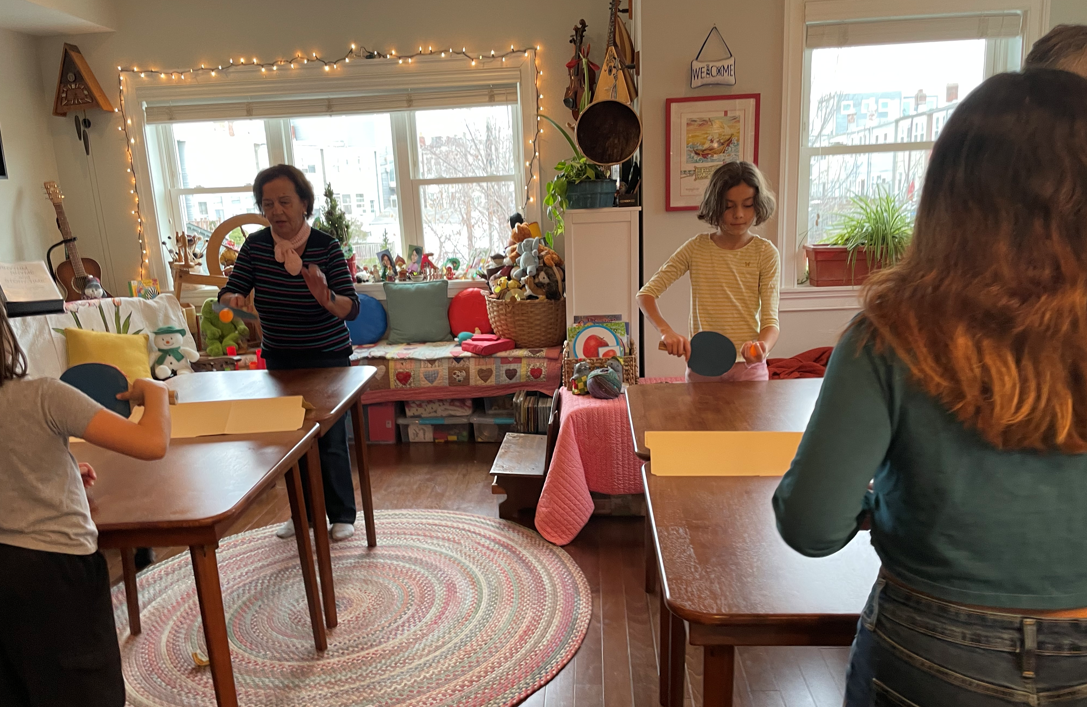
Photos from the Game